
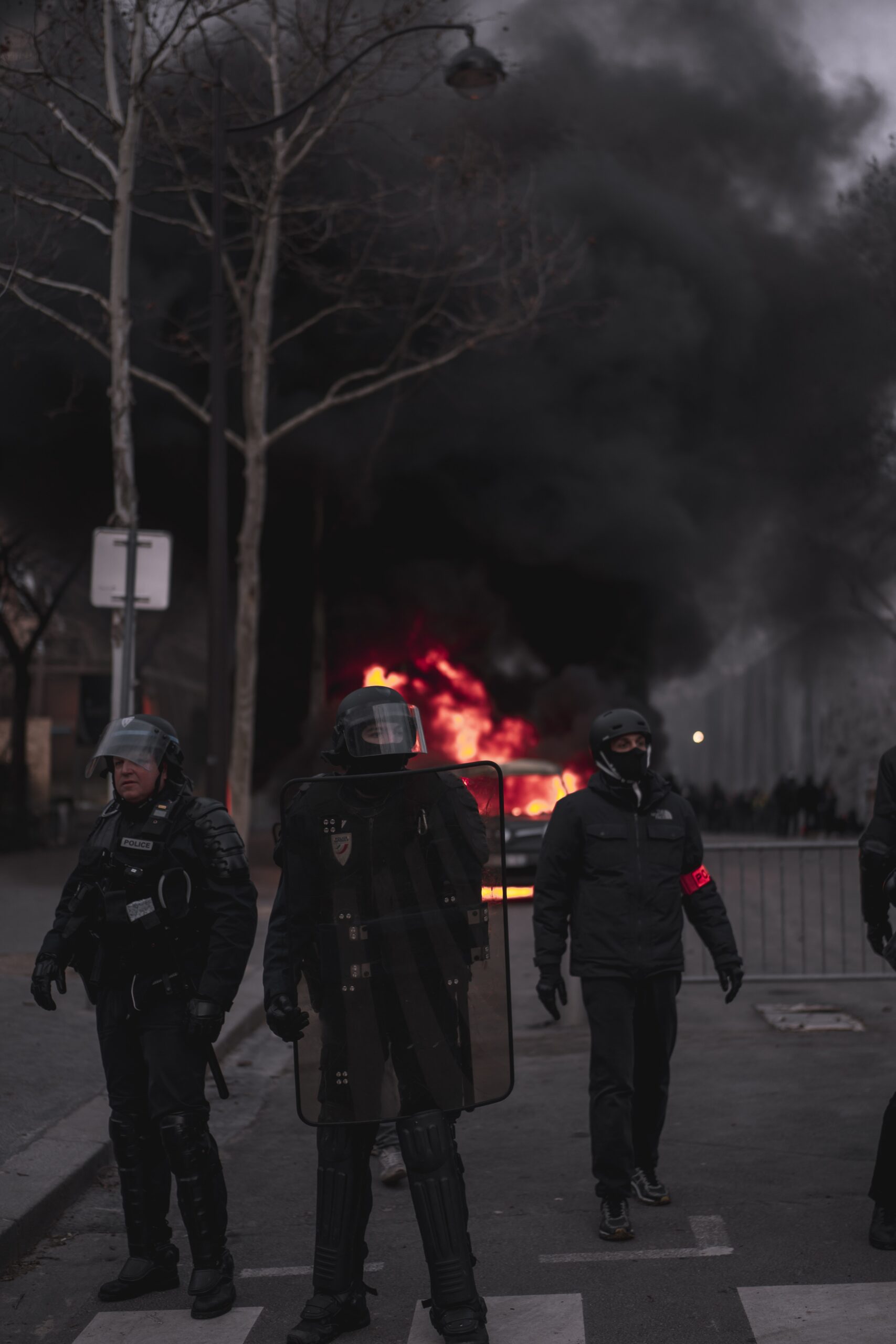
streets of Ukrain

Investment decisions in the time of war !!

How does a war that is raging miles away impact global financial markets?

And no matter how far away we are from the whole situation, the war is going to impact us.

Russia v/s Ukraine is all over the news.


But how?

Stock Markets & the war….

Every newspaper in the world has just been reporting stock market crashes since Russia invaded Ukraine a few days back. Even the Indian stock market plunged by around  5 % and the investors lost around a whopping Rs 13.75 Lakh crores.

But why does a war in some other part of the world impact all the stock indices?

It has largely to do with the human psyche. 

The stock market has always been an investment instrument that people consider high risk. And rightly so. 

They don’t want to trust it blindly in times of uncertainty. So, a situation like a war causes panic, leading to massive sell-offs. 

However, this panic is usually short-lived. Smart investors begin to buy the dip (pick up stocks at low prices thanks to the sell-off) and the market mostly goes up again in a few weeks. According to research by CFRA, the average time taken for markets to recoup losses is 28 days.

This is exactly what happened during the last World War III scare in 2020 when the US conducted a drone strike on an Iranian general.

The markets went into panic mode but were soon back to normal.

Stop the war on Ukraine

However, these fears can be well-founded if a war does happen. 

Supply chain crises, rising inflation due to shortage of goods, and other such factors can eventually eat away at a company’s profits, causing stocks to decline in the future. So, it makes sense to sell some iffy stocks, and invest the funds in safer investments or keep it in hand as a precaution.

But analysts predict that the current situation will not have a long-lasting impact on the markets. Plus, most investment gurus like Warren Buffett suggest that you should keep your stocks and buy more when there’s “blood on the street”.

Meanwhile, where the stock market starts tanking even at the talk of war, the prices of commodities start to rise.

 Commodity Play…. 

One of the first commodities to rise in the time of war is oil. It literally fuels the war in a big-big way. Even during peacetime, most countries have to import oil at least in some quantity. And the war makes the supply of this oil uncertain. 

Crude Industry


Hence, the prices go up. 

Right now, oil prices are at an 8-year high of $101/barrel.

And it’s not the only commodity touching the skies. Gold is also at an eight-month high.

Why gold?

Because gold is considered a “safe-haven” asset. This is the asset that people buy when they no longer have faith in other investments.

Here again, the human psyche comes into play. For centuries, humans have believed gold is valuable, probably because it was used as currency. That belief and the fact that gold is a physical asset you can hold and feel, often cause investors to buy or invest in gold during times of crisis

And it’s not just gold. Silver has also been gaining for the same reason.

Prices of other metals like aluminum, copper, nickel, and so on also usually rise during times of crisis or war because of their tangible utility. A lot of countries also import metals like nickel and cobalt, which are now needed in several electronic items. 

This reliance on imports makes their supply unreliable, which also plays a role in increasing prices.

Presently, aluminum prices are up 3% to about $ 3380/tonne, nearly touching an all-time high set in 2008, while nickel prices have hit a nearly 11-year high of $ 24,870.

Several other commodities are also impacted depending on their supply and demand and the regions involved in the war. For instance, the current war is expected to raise the prices of grains as Russia and Ukraine are both major suppliers of grains. The same goes for natural gas, of which Russia is the largest exporter.

So what should an investor do in such times of uncertainty? 

If you are invested, stay put and wait for geopolitical events to settle down.

If you want to buy stocks, then invest small and at regular intervals.

Park at least 10% of your investment into safe-haven assets like Gold & Silver

Continue with your SIPs.Volatile times are the  best, for returns from SIPs

Some products in the mutual fund space, are designed for safety and are excellent options in such uncertain times. The schemes in Balanced Advantage & Asset Allocation categories are excellent bets here. Must be utilized for lumpsum investments. These categories are ideal for participating in equity markets without worrying too much about market levels & valuations. The net equity exposure of the schemes changes automatically based on market valuations.


Have patience….Keep your focus on your long-term goal. Your fund managers are navigating wisely…….This too shall pass !!!
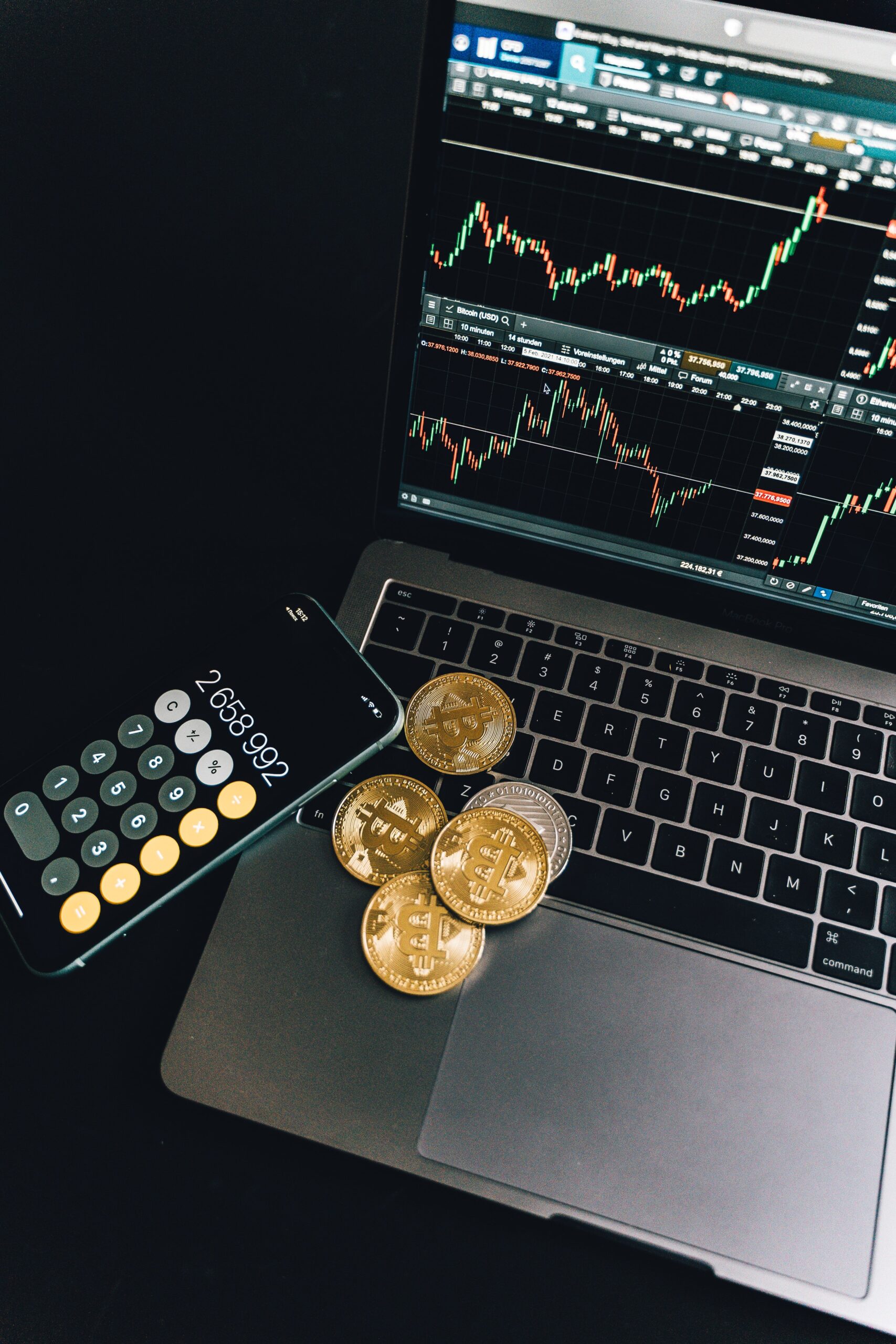

 

Digital Currency….The new kid on the block

crypto currency

Digital Currency….The new kid on the block

India is finally launching a CBDC (Central Bank Digital Currency)but how will that impact our current payments system?
The number one talking point of this year’s budget was the introduction of the Digital Rupee. Yes, after a long-drawn love-hate relationship with cryptocurrencies, India is finally accepting that they may have some merit.
But, it is still not ready to trust just any cryptocurrency. So, it is launching its very own central bank digital currency (CBDC) in 2023.
So how will this impact you and me ???
Let us do some soul searching…
Crypto Mania
An outdated payments system has increased the adoption of cryptocurrencies. While many are drawn to crypto because they are a faster, more efficient, and more private payment method, others are into it from an investment perspective.
But since cryptos are not yet widely accepted and still relatively new, they are very volatile. Plus, they can easily be used for money laundering as transactions are untraceable.
Also, many cryptos leave people vulnerable to scams, where you can lose your entire life savings. So, for governments across the world, the massive adoption of cryptocurrencies became a pain point. Not just that, they were worried that if everyone started using these private cryptocurrencies, the government-owned currencies would decline in popularity and value.
So, they came up with CBDCs. 87 countries are currently exploring CBDCs, and 9 have already launched some version of a digital currency. And now India is one of them.
The idea of a CBDC is a sweet rip-off of the cryptocurrency model – both rely strongly on encryption.
They will be built on a blockchain just like normal crypto and will work exactly like the present-day cash, the only difference being, they will be digital. Imagine apes turning into humans. That’s it. Digital currency is the natural evolution of money.
But unlike normal cryptos, they won’t be volatile. The price of one Bitcoin differs from day to day, but the price of one Digital Rupee will largely remain the same. This is because the Digital Rupee (and other CBDCs) derives value from our physical currency, which is pegged to the US dollar.
Advantages of a Digital Rupee
If you’re thinking that the Digital Rupee is just like digital payments and won’t make much of a difference, you’re mistaken. The Digital Rupee has the potential to completely transform our payments systems and solve their existing problems.
Firstly, it will make things much easier for the government. It won’t have to waste time, effort, and money in printing so many currency notes.
Secondly, it will eliminate the need for bank accounts. The current digital payments are linked to the money you have stored in your bank. But the Digital Rupee will be stored in an app on your phone.
So, even those without a bank account will be able to use digital payments easily. And this is a big deal for India where 19 crore adults don’t have a bank account. We are the world’s second-largest unbanked nation. This will also protect people from bank fraud and help them keep their money safe.
Plus, cross-border payments and remittances are still a major hassle as banks depend on intermediaries like VISA cards, settlement institutions, and clearinghouses to transfer and redirect funds amongst each other.
But CBDC transactions can take place easily and quickly through the blockchain without any intermediaries. This will make remittance transactions much more affordable for us.
Also, CBDCs could be a great tool to eliminate corruption. Every step and node of CBDC is traceable and unhackable, so with CBDC, we won’t need a demonetization. The government will legally be able to track and monitor every transaction.
With easy tracking of digital footprints, there would be a significant increase in tax collection with a swift leeway into new, innovative ways of providing financial services. The governments would know how to better their monetary and fiscal policies. In fact, they could tweak them on a day-to-day, hour-to-hour basis, bringing an unprecedented level of precision to monetary management.
All this sounds great, right? But well, every coin has two sides. So, let’s flip the coin and peep to the other side.
The Flip Side….
The first and the foremost concern that people have with the Digital Rupee is that it will infringe on their privacy. The government will be able to track and record every payment one makes. This is literally the opposite of what people want from a cryptocurrency.
So what if I don’t have anything to hide… how will this impact me?
Well, you see the government could build this CBDC on an authorized blockchain just like China. Through this permission blockchain, it could dictate where and how you spend your money. In fact, it could rule that you have to spend a certain part of your income to ensure enough liquidity in the economy at all times.
Plus, this model could be disruptive. Too disruptive. It could cause a lot of companies, especially fintech firms, to either go out of business or change their business models.

The biggest disruption will be in the banking system.

Just imagine, if a majority of the people stop depositing money in the banks, how will they extend loans? They would have to increase interest rates. Some banks could even have to completely shut down. This could end the banking industry as we know it.
And we’re not making these reasons up. The UK government conducted research on CBDCs and these are some of the disadvantages that the report threw up.
Plus bringing all the money onto a blockchain will be a mammoth task. And if the entire money in circulation is not on the block, issues such as corruption, income escaping taxes, terror funding will persist.
But then, this is still some distance away. Some very fundamental questions remain unanswered, like will CBDC give interest on funds deposited ??
India & China are amongst two of the nine countries in the world that have addressed this issue & have woven a tax structure around it. The world is watching very keenly and in time, would come together to formulate a common policy around it. The first few steps towards a working CBDC system, have been taken….

Russia On The Prowl  – Current Geopolitical Tensions

Chess match in progress

Russia On The Prowl  – Current Geopolitical Tensions


The quest for power has time and again led to wars and bloodbaths. Now there’s a new fight brewing in the West that could impact the entire world.

Russia v/s Ukraine.

Both the US and the UK believe that Russia is soon going to invade Ukraine as it has parked several troops in Belarus, near the Ukrainian border.

However, both countries and also the European Union have threatened to impose sanctions on Russia if it actually attacks Ukraine. And these sanctions could disrupt the entire global economy.

Why is Russia after Ukraine?

To understand the entire situation, you need to know about Russia and Ukraine’s history. They are kind of like the India and Pakistan of the West.

Both of them initially belonged to the same bloc, the Soviet Union. But they both eventually split when the bloc broke down in 1991.

And when a big chunk of land breaks up into several parts, there are always border issues. So, Russia to some extent feels it has a claim on Ukraine. More so, there are even Russian supporters in Ukraine calling for separation.

And in 2014, Russia tried to exercise this claim over Ukraine by annexing Crimea, which was an autonomous region overseen by Ukraine. This was a bad move on Russia’s part. The major powers of the world obviously did not approve of this invasion of Crimea, so they did what they do best. Levied sanctions on Russia.

Now, compared to the olden times when countries waged war on each other when they were mad, issuing sanctions seems like a very mild reaction. But it isn’t. These sanctions on trade, economy and business can bankrupt a country. And that’s exactly what happened. The sanctions caused a financial crisis in Russia and it ended up losing around $140 billion per year!

The Current Situation

Now that we have got the history behind us, let’s look at why Russia is preparing to invade Ukraine right now.

But then of course, Russia has denied that it wants to invade Ukraine.

Well, well. Actions speak louder than words. And Russia has 100,000 troops stationed at Ukraine’s border.

But why now?

You see, Ukraine wants to become a part of NATO, which is a multi-country military alliance amongst around 30 countries. The main objective of NATO is to protect member countries from foreign military threats.

Now, if Ukraine becomes a part of NATO this organization comes closer home to Russia. This is scary for the country as several of its rivals, like the US, are part of NATO. And Russia claims this is why it has stationed troops at Ukraine’s borders. But the US and the UK don’t believe this.

And this million dollar question. Why is the world concerned wrt what happens between Russia & Ukraine ??More so, why we, who are so far away from all this, have to be concerned ??

The US and UK have to care because they signed a treaty in 1994 to protect Ukraine if it gave up its nuclear weapons.

So, if Russia attacks Ukraine will it lead to another World War? Thankfully, No. But the US, the UK, and the EU will impose sanctions on Russia for this new attack. And this impacts all of us.

Russia is one of the biggest suppliers of natural gas to Europe and has created a pipeline called the Nord Stream 2 to supply this gas easily to major countries in the continent. Now, one of the sanctions that these countries could impose on Russia is not to approve this pipeline, which will be a major setback for it.

But at the same time, it will leave Europe without a precious supply of natural gas, which could lead to power cuts and increase the price of electricity.

So why would European countries approve a sanction that they know would harm themselves?

Because it would impact Russia more. And not just financially. You see, the pipeline would give Putin great leverage over Europe. Russia could threaten to cut the supply of natural gas at any time to ensure that the EU would comply with its demands. So, the EU is cutting to the chase and beating Russia at its own game.

What’s worrying is that this whole game is not restricted to just Europe. In this global economy, each country is connected with the other through delicate webs. Russia is the  second biggest producer of oil. If these sanctions halt the trading of oil or if Russia itself decides to cut down supply, oil prices could touch the sky. Already these tensions have taken oil prices to a 7 year high.

If the conflict escalates any more, then the growth of global GDP growth would come down to 0.9% from the forecasted 4.9%

Plus, for India, this conflict has other direct consequences. To fight the US, Russia may strike an alliance with China (because the enemy of your enemy is your friend). This scenario would be disastrous for us. Because Russia provides India with a lot of weapons. If China, which is fighting with us for border control, asks Russia to cut ties with us, we would be in trouble.

And even if China and Russia don’t join hands, US sanctions on Russia could make weapons trade more difficult for us. See the problem now? This uncertainty has already caused global stocks to plunge.

So, Russia invading Ukraine is in no one’s best interests.

And many believe that Russia knows this very well. It has played its cards very nicely so it can negotiate with the US and other European countries.

But will the other countries be open to negotiations? Or will Russia eventually invade Ukraine?

Only time will tell… 

What Could Move Markets In 2022?

Planning for path ahead

Que Sera Sera….

Let us make some intelligent guesses as to what could move markets in times to come, from a one-year perspective.

COVID –Omicron.

Vaccinations against Covid are effective & r getting better, but it is still sometimes when it completely goes away. The world will have to learn to live with it for a while.

Omicron is transmitting at a very fast pace but hasn’t proven fatal so far. What remains to be seen is what would happen if a large number of people get infected at one go & in one territory. Would it be fatal then?

Interest Rates At US

US Fed has indicated very clearly that in 2022 there will be 3 interest rate hikes to battle high inflation. World markets have started to come to terms with it & are factoring it accordingly.

India Growth Story – Economic Indicators.

IMF has stated that we will grow at a rate of 9.5% in 2021. This is the highest growth rate for any country this year. As per IMF, we will grow at the rate of 8.5% in 2022.

In the period of April-June 2020, we logged in a negative growth rate of -24.4%. Same quarter in 2021, we are + 20.1%, more so this is the first time in our independent history that we have grown so robustly.

Wholesale Price Inflation (WPI) is at 12 year high. It was at 14.23% in Nov ’21. This is primarily due to the rise in food prices especially of vegetables, minerals & petroleum products.

Per Capita Income is down by 8.24%.In 2020-21 this has come down by Rs 8951 & was at Rs 99,694. In 2019-20 we were at a record high of Rs 1,08,645.

The unemployment rate has improved from where we were in April 2021. In April the rate was 7.97%, in May at 11.84% and in Nov this has reduced substantially to 7%.

42 startups got the proverbial Unicorn status in 2021. In 2011 Inmobi was the first Unicorn ($ 1 billion valuations)startup. Today after 10 years we have 79 Unicorns & counting.

Stock Markets

Production disruptions, intermittent market closures, raw material price volatility & credit availability were the key reasons affecting market players in the Covid environment.

Mid & Small Cap stocks have rallied a lot in 2021 which has pushed their valuations up tremendously. Earnings growth & valuations, two counteracting forces will influence the performance of mid & small caps in 2022. Currently, after a solid run in the past 18 months, their valuations are high, both against the trend as well as large-caps. This high valuation will weigh down its relative performance.

Key large players in many sectors have grown faster than respective industry averages. And with stretched valuations in mid & small caps, large caps have a better chance of delivering in 2022.

With generous liquidity coming to an end, investors need to be careful with stocks whose valuations are very high relative to their past trends or that of peers.

However let us not forget that the Indian economy is at the start of a cyclical upswing, the two-year period up to Covid saw a sharp downswing.

Methinks that if the strength of the earnings recovery over the next 3 years is robust then we need not worry much about falling liquidity. A balanced view that considers medium-term growth prospects along with falling liquidity, would be more appropriate.

The year 2022 is going to be absolutely event-driven, both nationally & globally. Asset allocation will hold the key to investing. Spread yourselves across Large, mid & small caps & Dynamic Asset Allocation themes. Remain true to your risk profile & appetite. Identify your goals, plan meticulously for your desired returns & steadfastly, stay the course.

And yes, Indian stock markets are the place to be & stellar returns will come if one invests wisely & stays the course, keeping your life goals in mind !!!

Wishing all my investors a very happy, healthy & eventful New Year 2022!

Financial Independence To Retire Early (FIRE)

FIRE (Financial Independence To Retire Early) as a concept has been prevalent for a while. It largely means to live very frugally in the first 15 years of your professional life, save & invest aggressively, make your nest egg, retire when you are young and live the rest of your life doing what you would want to do. Chase your dreams & be out of the rat race. Is it required in the Indian context? Yes it is.

As more & more institutions want their top management to be young & their top deck to be lean, a top notch professional career doesn’t seem fulfilling after You hit the 45-50yr bracket. How many of us have the courage to kick start a new venture @ 50??

A low single digit number for sure.

But yes, all mutual fund investors, can create wealth in India to F.I.R.E.
Methodology is very simple & easy to achieve if you are disciplined in your approach & promise to stay invested. The asset class is equity, the product is Mutual Fund & the method is SIP (Systematic Investment Plan).The keyword here is “Time“.

How much time are you prepared to give your investments. If you invest a monthly amount of 50,000 for a time period of 12 years in a good equity scheme. You can generate a monthly income of 1,00,000 for 50 years & after 50 years ,You r still left with a corpus of 2.77 Cr.

Here are the workings for an SIP Investor to FIRE

Current Age – 33 years

Current Age 33 years
SIP start Date Nov-21
Investment Period 12  years
SIP Amount (Mthly) 50,000
Return Rate On Investment (XIRR) 12%
Corpus after 12 yrs 1.59 Cr
Retirement Age 45  years
Withdrawals – Month & Year Nov 2034 Onwards
Monthly withdrawal Amount 1 Lakh
Expected Rate Of Return On accumulated Corpus 8%
Withdrawal Duration 50  years  (till 2084)
Total withdrawn amount (Nov 2034 – Oct 2084) 6 Cr
Corpus Value after 50yrs (as on Oct – 2084) 2.77 Cr