
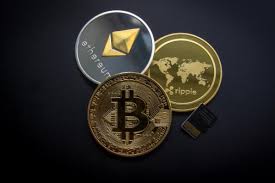
Recent Crypto Meltdown- Explained


One bad apple and upcoming regulations have shaken the whole crypto market recently

Here’s what has caused the massive crypto crash that has caused investors to lose billions. Crypto has had a great run over the past few years. The pandemic got everyone interested in this supposedly “futuristic currency system.”


More so, even nations have accepted crypto.

But this crypto-mania may soon be coming to an end thanks to the recent crypto market crash which saw investors losing $200 billion  in a day and $600 billion in a week.

But what’s caused this crash?

Shaky Stable coins

It all began with the crash of the twin crypto currencies Terra and Luna last week.

Both currencies fell over 99% losing almost their entire value. The crypto’s market value fell from $ 40 billion to $ 500 million in days.

Why? To understand this, we first need to understand how Terra and Luna work.

Terra is an algorithmic stable coin.

These are the non-volatile version of crypto currencies that, you guessed it, remain stable.

How do they remain stable?

They are linked to a real-world asset or currency, like the dollar. Companies that launch stable coins usually have dollar or other currency reserves equivalent to the number of their stable coins in circulation.

So, the price of Bit coin may fluctuate, but the price of these stable coins is expected to remain the same.

For instance, the price of Tether (a well-known stable coin that was also a victim of the crypto crash) promises to give you $1 every time you sell one Tether.

But algorithmic stable coins are different.

They aren’t backed by dollars but a complex mix of math’s and code.

Terra, for instance, is backed by a code that ensures you can always get $1 for a Terra when you sell it.

But unlike Tether it doesn’t give you that $1 directly.

It gives you $1 of Luna (its sister currency that operates on the same block chain) in return.

And the price of Luna isn’t fixed. It works just like other cryptos: it runs on faith.

So, you see, Terra isn’t all that stable.

And this instability is what caused the crypto to crash.

The Proverbial Slide….

Because of Terra’s complex underlying mechanism, the coin is very popular with traders.

You see, every time Terra’s value falls a little, people buy Terra and exchange it for $1 of Luna, earning extra money on each transaction. But despite this loophole, the system worked because Terra didn’t really plummet that much.

Until last week.

The Terra block chain also has a DeFi platform called Anchor. It incentivizes people to park their Terra on the platform, which it then loans out.

The depositors then get interest on their deposits.

About 14 billion worth of coins were deposited in Anchor in the beginning of May, but suddenly last week a large number of depositors withdrew their money from the platform, causing deposits to fall to $ 1.6 billion. This caused Terra’s value to fall way down and traders began buying the currency to exchange it with Luna.

In an effort to maintain Terra’s dollar pegs, the Luna Foundation Guard (the foundation which maintains Terra’s dollar peg) sold its reserves (which contained over $ 3 billion worth of Bit coin and other crypto) to pay back investors.

This massive sell-off spread like wildfire in the market, with the panic taking down the price of other cryptos.

Tether, which is one of the top three crypto currencies in the world, also lost its dollar peg, falling to $ 0.96 earlier this week before recovering. It still hasn’t reached the dollar mark yet.

This is despite the fact that Tether’s chief technology officer ensured that sellers were still easily getting $1 in exchange for the coin and the company had enough reserves to honour all transactions.

This just proves that stable or unstable all crypto coins run on faith.

Once panic sets in, nothing can save these coins.

And a widespread panic has set into the market not just thanks to this sell-off, but for multiple other reasons like the interest rate hike and the stock market crash.

To add fuel to this fire, Coin base recently announced that if it went bankrupt all of its users’ money would go down with the sinking ship.


The Exchange Muddle

Regulators have always been after crypto exchanges (and rightly so).

And looking at the current market volatility, regulators forced Coin base to accept publicly that if it ever went bankrupt it would not be returning their money. It would go towards paying off its debts.

This statement came along with a less than optimistic first-quarter earnings report, making crypto users extra careful.

And Coin base is not the only exchange in trouble.

Indian exchanges like WazirX and Coin Switch Kuber are also facing issues. You see, the National Payments Corporation of India recently made an announcement that it wasn’t aware of any crypto exchanges using UPI.

This indirectly could mean that no crypto exchange had secured permission to use UPIs.

As a consequence, these exchanges shut down UPI transactions. Some have even stopped accepting NEFT transfers or net banking as banks are also not cooperating with these exchanges until NPCI clarifies things.

Hence , users are moving away from crypto voluntarily or involuntarily.

And if more countries now introduce a safer Central Bank Digital Currency, it could be a death knell for a lot of speculative cryptos.

Does this mean crypto is over?

Nopes, Niyet, Not at all…

No matter how hard regulators try, ending the reign of cryptos like Bit coin and Ether is going to be nearly impossible.

Crypto will survive in one form or another, make no mistake about it.

Now only time will tell which cryptos make it and which one will disappear forever.

 

RBI Policy & Its Impact on you

                RBI Policy & its impact on you


The RBI surprised us by raising interest rates and it is both good and bad for us.

RBI recently did something that a lot of us were expecting but didn’t exactly see coming the way it did: it raised interest rates way ahead of its scheduled June meeting.

This surprise announcement has led to a frenzied stock market sell-off and a flurry of scary headlines.

But there’s no need to panic. Interest rate hikes are a part and parcel of life and we’re here to help you decode what exactly this means for you and the economy.

Was it long overdue ???

The first step to decoding the RBI’s interest rate hike is understanding why it was important. India had been maintaining an ultra-low interest rate (interest rates determine the cost of borrowing in the economy) of about 4% since 2018.

And this low interest rate made borrowing easy, so there was a lot of cash in the economy. Then COVID came and the financial crisis that it brought with it further prompted the government to inject extra cash into the economy. So, there was a lot of money in the economy, while the supply of goods was low, thanks to COVID.

This demand-supply imbalance was the perfect recipe for inflation Add to this the tadka of the Russia-Ukraine war and Indonesia’s ban on palm oil supplies (both of which have raised the prices of commodities like grain, crude oil, and edible oil) and you get a Consumer Price Index inflation rate of 6.95% (a 17-month high).

To get this under control, the RBI has to get the amount of money in the economy under control. So, it has raised the repo rate (the cost at which it lends money to other banks) from 4% to 4.4% (this is the largest increase since 2011).

This will make it costly for banks to get money and they will pass these costs to us, making borrowing in general costlier. It is also raising the cash reserve ratio (the amount of money banks need to keep with themselves) to 4.5%. This is expected to take away Rs 87,000 Cr worth of extra money currently in the market.

So, the rate hike is a great move, no? It will bring down inflation and make goods more affordable for us again. Well, that will take some time and a few more rate hikes.

In the meantime, this rate hike can be both good and bad for you.

How will it impact your Investments

Good news first: A rise in interest rates means that this is the perfect time to invest in fixed deposits and government bonds. As interest rates rise, the rate of returns on both these instruments rises too. This kind of incentivizes people to park their money in these instruments for some time, removing the supply of this cash from the economy.

Because of this your debt mutual fund investments also pay more.

But because of the rise in interest rates, you will also have to pay more interest on your home loans, car loans, and personal loans.

Also because people are putting their money in these instruments, they sell their equity investments, causing the stock market to fall.

But are people taking money out of the stock market just because bonds give a better investment opportunity right now?….Nopes

A lot of sectors are going to suffer because of this rate hike and as a result, the stocks of these companies will also not perform that well right now.

And which are the sectors who will bear the brunt of this hike and why?

The economy, on the backfoot….

The reason why the RBI waited so long to raise the rates was that it wanted the easy money in the economy to help fuel our growth. When companies can borrow money easily, they invest in more projects, create more factories and generate employment.

But with borrowing costs high and the inflation still not tamed, many companies and industries will be in a worse situation. For instance, the automobile industry and the real estate sector will most probably see a decline in growth.

With loan rates going up, fewer people will be interested in buying houses or cars. Many automobile companies will also suffer because the cost of setting up new plants will also go up.

The telecom and infrastructure industries, which need huge funds for projects and so are heavily dependent on debt, could see a slow down in growth.

The same goes for the agricultural sector.

You see, a lot of farmers are dependent on loans to buy seeds and fertilizers. So, the rise in interest rates could become problematic for them.

Some sectors like the banking industry could see profits, while the services sector could remain unharmed.

But all in all, the economy could see a slowdown in growth and a rise in unemployment till inflation is actually tamed.

So, what should we do, right now?

Personally, we can’t do much.

Our advice: start protecting yourself from upcoming problems right now.

Create an emergency fund, and upskill yourself so that you are less likely to be impacted by the rising unemployment.

Do not take loans unless you think you will be able to bear the increased interest costs.

And most importantly, do not panic.


Future – Amazon – Reliance – Three is a crowd

Future – Amazon – Reliance – Three is a crowd


Reliance is saying it has called off the Future Retail deal, but this statement is just like your ex claiming that they broke up with you when you broke up with them.

One of the world’s most entertaining battles has been raging in India for the past two years. The fight between two of the world’s richest people: Jeff Bezos and Mukesh Ambani.

While Bezos had the world’s second-biggest fortune, Ambani had the home ground advantage. What they didn’t have (and wanted badly) was control over the Future Group.

Sadly, this interesting battle has kind of had an anti-climactic ending now.

Allow me to take you through this hard fought, full of bounce & turn cricket test match….

First Innings

The story begins in 2019.

The Competition Commission of India had just given Amazon permission to buy a 49% stake in Future Coupons for Rs 1500 crores. For Amazon, the deal was just a way to get to Future Retail.

You see, Future Coupons is a promoter of Future Retail (part of the Future Group), and so by buying a 49% stake in Future Coupons, Amazon automatically (and indirectly) got a 3.58% stake in Future Retail.

Additionally, the deal gave Amazon the right to buy all of the Future Coupon’s stake (7.3%) in Future Retail three years after the deal.

Everybody was happy with the deal. Especially Future Retail, because it had massive loans worth around Rs 3500 Cr. The deal would not only give it cash to pay off some of these debts but also an opportunity wherein Amazon would list Future Retail products on its marketplace.

Come 2020, with a plot-twist: the pandemic.

Future’s loans increased (amounting to almost Rs 11250 Cr) and Amazon didn’t provide any help.

Enter: Mukesh Ambani

Ambani saw this as a great opportunity to expand Reliance’s retail business. Instead of building its own stores and warehouses, he thought it was much easier to just buy those from Future Retail. And the company agreed, it was desperate to pay off its debts.

But this made Bezos angry.

You see, his game plan was to acquire Future’s stores so Amazon could have an offline presence in India.

Okay, but why not just create its own stores like the Amazon Go stores in the US?

First, that would take a lot of money, time and effort. Precisely why Ambani also wants to acquire Future’s stores and not create his own.

Second, according to Indian rules, foreign e-commerce giants like Amazon and Walmart cannot open physical stores in India.

So, Bezos decided to fight tooth and nail to stop Reliance’s deal.

The two companies went to several courts until finally, the Competition Commission claimed Amazon made the deal with Future Coupons under false pretenses. It said that Amazon had not disclosed its real purpose when striking the deal: its interest in Future Retail.

When Amazon had proposed the deal, it had only said that it was interested in bridging the gaps in India’s payment structure through Future Coupons. There was “a deliberate design on the part of Amazon to suppress the actual scope and purpose of the” deal.

So CCI does not approve the deal anymore and will review it again. And to rub spice into the wound, it also fined Amazon Rs 200 Cr for misleading.

So, is the match over? No, it has just begun.

Second Innings

Jeff Bezos did not become the world’s second-richest person by giving up. He further escalated the issue, contesting the CCI’s decision, and taking it to the National Companies Law Tribunal.

His argument: the scope of the deal was specified and the CCI could not just change its decision after two years. And that’s not all. Amazon went completely on the offensive, taking Future and Reliance to even more courts, even the Supreme Court.

If Bezos couldn’t have Future, he wouldn’t let Ambani get it so easily.

It began a hostile takeover of Future.

You see, waiting around for the deal to happen seemed like a major hassle. So, Ambani decided to just start taking over Future’s stores.

But how can he do so?

Well, you see, as Future didn’t have the money to pay off landlords of several stores, Reliance had stepped in and taken store leases on its name. It then sublet the stores back to Future. But technically, these stores were Reliance’s.

Plus, a lot of inventory for these stores had also come from Reliance JioMart. And Future had not paid for this inventory.

So, as a way to reclaim some of the money it had put into Future, Reliance laid claim to over 900 of Future’s 1500 stores even without a deal.

Problem solved?

No, this one wrong move that Reliance took to win the battle ended up costing it the war. Both Future and Amazon created major noise about this hostile takeover. Amazon took out front page ads calling out Reliance’s “fraud”.

All of this noise did not impact Reliance. But it impacted Future Retail’s secured creditors.

Who are secured creditors? They are financial institutions like banks which can reclaim Future’s assets in case of loan default.

Because these banks’ money is at stake, they get to call the shots about a potential deal or acquisition.

And they have rejected Reliance’s deal.

So, Reliance can now no longer acquire Future Group. Or as it is saying, it is not going forward with the Future deal.

But why did the creditors reject such a great deal?

Because Reliance’s hostile takeover move made them doubtful about whether such a deal was a good idea.

Plus, Reliance had earlier claimed that it would give priority to those holding the company’s bonds and pay off their debt first. This didn’t sit well with the secured creditors as they should be the ones getting this priority.

That’s why 69.29% of secured creditors rejected the move.

So, what now? Will Amazon swoop in to save Future?

Well, it could, but banks are considering going the insolvency court route.

So, ultimately, it looks like the battle has ended in a draw.

But both Bezos & Ambani are tough competitors and to both of them Future Group is of immense strategic value. I think they would want the dust to settle down first, before making their next move..

Picture abhi baaki hai mere dost……

Is There A New World Order Coming

Is There A New World Order

Coming…..

The emergence of 2 BIG economies in Asia and an old challenger

from Europe, want their respective places under the sun.Is it about

time…

The game changing event , to an earlier prevailing world order,was

the first world war.How are events shaping out today ???

Is the concept of globalization getting threatened again ?? My two bit

on this please…

What comes to your mind when you hear the word “pizza”?

Domino’s Pizza, right?

What about mobile phones?

Apple or Samsung, isn’t it?

But what if these companies had never entered India? How different

would our world be?

And what if such foreign companies never get to enter India in the

future?

The Benefits of Globalisation

Globalisation has served India well. When India finally embraced it in

1991, our GDP improved massively,and our exports also grew by 20%

But the current scenario is threatening to overturn it.

US’ favourite weapon of war has been trade sanctions. It is the most

common move that is there in the playbook. And it’s not a new one.

During the first World War major countries were fighting each other and

the best way to win was to limit supplies. Countries which were spread

across the world had a distinct advantage.

The UK where most major businesses were located could simply stop

companies from supplying goods to enemy nations.

And something similar is happening right now. Major US and UK-based

companies are boycotting Russia over its invasion of Ukraine.

But this is not the only thing threatening globalisation.

World trade has been impacted majorly since the 2007 US housing crisis

Since the world economy was so interconnected, the whole world felt

financial shockwaves from the crisis.

The Covid-19 pandemic and the various trade wars (like that between

US and China) have just highlighted the problems of globalisation.

So, many countries like Russia and China have worked hard to

become self-reliant. And now India is also moving towards the

same path of “aatmanirbharta.”

Though this concept has never been at odds with globalisation, it could

help safeguard our national interests in case of future wars and

pandemics.

But is self-reliance the ultimate solution?

Well, no. If it was, countries would never have agreed to forget all their

differences and come together to trade.

Self-reliance comes with its own set of problems- the most alarming

being stagnation of development.

Globalisation leads to exchange of innovation and ideas. The world as

we know it today, wouldn’t be so without globalisation.

So, what is the solution?
Well, one solution could be that companies separate business and
politics at least when it comes to international matters. But this is
becoming increasingly more difficult for businesses as customers and
stakeholders only want to support companies that are involved in social
matters.
A second solution could be building better supply chains so that
countries don’t have to opt for self-reliance just out of the fear of another
pandemic.
However, these solutions are weak and depend a lot on countries’
mutual cooperation. Something that doesn’t seem to be on the cards
right now.
Methinks,the world will have to wait till the geopolitical event around
Ukraine-Russia pans out to its logical conclusion.The new world order
which emerges after that,will lay foundations to the next leg of
globalisation.There will have to be some more players in the game &
rightly so.

Nickel The other Commodity

Nickel…The other Commodity

Oil prices are going sky-high and have become a huge cause of concern
But oil is not the only commodity that is rising.
On 9th March Nickel also broke all records by rising 111% to $100,000 /
tonne The rise was so huge & impactful that the London Metal Exchange
(LME) had to halt nickel trading. Let us analyse this phenomenon
What is a Short Squeeze…
If you notice, how for the last two years the root cause of everything was
COVID? Seems like this year’s root cause is going to be the Russia-
Ukraine war.
Russia is the third largest producer of nickel. But, have the supplies
been threatened so much that the prices have shot up 111%?
Not really. The real reason is technical & in investment parlance ,called a
short squeeze.
When people trade in futures contracts, they can take bets on whether
the price of a commodity or stock will rise (a long call) or fall (a short
call).
The second process is called short selling When people take such long
or short bets, they don’t own the commodity. They are just borrowing it.
Yes, that’s a thing you can do: borrow commodities and sell them on the
market.But what is borrowed must be returned.
So, essentially what short-sellers do is borrow when the price is high and
sell it. Wait for the price to fall, buy the commodity at that point in time
and return it to the exchange.But then here is the catch….

What if the price the commodity doesn’t fall?

Then you have a situation like the current one.

For the last few months, major market players including the Chinese

Tsingshan Holding Group (the world’s largest nickel and steel producer)

had been shorting nickel, betting that its prices would go down.

But the prices went up.

Now, as these people were just borrowing the nickel, they had to pay a

margin or a fee to secure their short position.

This margin keeps increasing if your bet goes wrong.

So, if you’re hoping nickel prices will fall and they rise, you have to keep

paying additional money to hold that short position until the price actually

falls and you can buy nickel at a low price.

But since the price rose so much, the short-sellers didn’t have enough

money to pay their margins.

They had to buy nickel at the super inflated price as they now had to

close their position and return the commodity to the exchange.

Now, what happens when you buy a lot of one commodity at the same

time?

The price rises further!

That’s exactly what pushed nickel to record highs on 9th March

And Tsinghshan is now looking down at losses worth $8 billion

This was a historic short squeeze. But this is definitely not the first time

this has happened.

Back in 1985 LME had to stop tin trading for five years because of a

similar incident gone wrong.

The high nickel prices will impact certain industries like the electric

vehicle industry which uses nickel to make EV batteries.

But most of us won’t be affected as nickel is not a staple commodity like

oil or food.

Moreover, analysts are betting prices will fall soon. Because a number of

Chinese nickel mining plants are currently being set up in Indonesia,

which will boost supply again.

So, it is still the rising oil prices that we need to worry about.